No. It's a structured focus system that uses audio as one component - alongside session matching, mode selection, and ritual-building. It's designed specifically for cognitive output, not entertainment.
No. Auralyo does not claim to alter brainwaves or provide medical treatment of any kind. We apply research-informed design principles to create structured listening environments that support sustained attention.
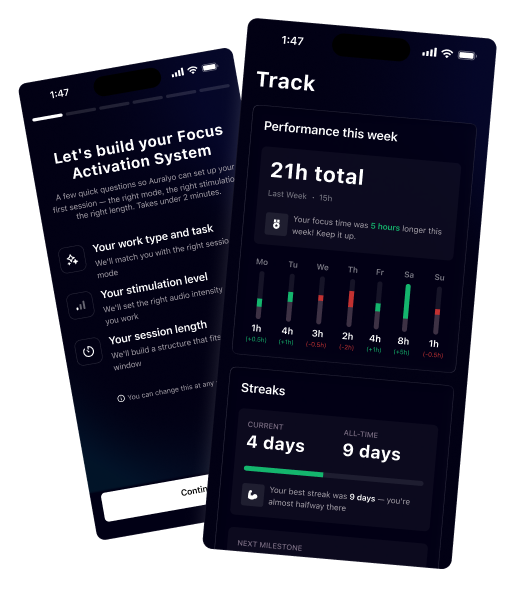
Most focus audio apps are built around sound generation - adaptive ambience, engineered tones, or curated playlists. Auralyo is built around execution. The difference is the system: a quiz-based setup, task-specific modes, adjustable stimulation, a repeatable start-work ritual, and a performance dashboard that shows your deep work improving over time. The goal isn't a pleasant listening experience. It's sustained output you can measure.
No. Auralyo is built for active cognitive work - writing, coding, studying, analyzing, building. If you're looking for relaxation or sleep audio, there are better tools for that.
Auralyo works best as part of a broader focus practice - not as a standalone fix. It's a system to support focused work, not a cure for distraction. If you face significant attention challenges, use it alongside other strategies.
To start your plan, you complete checkout on the web - your introductory price for the first period, then it renews at the standard rate shown at checkout until you cancel. You can cancel anytime in the app or by emailing support@auralyo.com. Once you've started, just open Auralyo and press start.
Recommended for best immersion, but not required. Many users find that even ambient listening through speakers provides meaningful support during focused work.
Yes. Auralyo uses non-invasive structured audio similar to instrumental music. It makes no medical claims and is not a medical device.